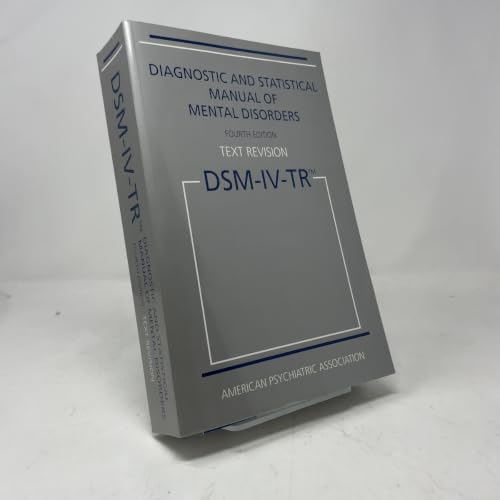
Diagnostic and Statistical Manual of Mental Disorders, Fourth Edition
DSM-IV-TR®
By: American Psychiatric Association
Features information on mental disorders as well as on treatment and procedures relating to those illnesses.
AI Overview
The "Diagnostic and Statistical Manual of Mental Disorders, Fourth Edition" (DSM-IV) is a comprehensive manual published by the American Psychiatric Association (APA) in 1994. Here is a detailed overview of the book:
Key Themes
Classification of Mental Disorders: The DSM-IV provides a systematic classification of mental disorders, including their diagnostic criteria, definitions, and classification systems. It aims to standardize the diagnosis of mental health conditions, facilitating communication among mental health professionals and ensuring consistency in treatment approaches.
Diagnostic Criteria: The manual includes explicit diagnostic criteria for each disorder, which are based on extensive literature reviews, data analyses, and multi-center field trials. These criteria help clinicians identify and diagnose mental disorders accurately.
Clinical Significance: A significant change from previous editions is the inclusion of a clinical-significance criterion in nearly half of the categories. This criterion requires that symptoms cause "clinically significant distress or impairment in social, occupational, or other important areas of functioning".
Organization and Structure: The DSM-IV is organized into several sections, including a section on disorders typically first seen in infants, children, and adolescents. It also includes quick reference algorithms and detailed information sections to aid busy primary care physicians in diagnosing psychiatric disorders.
Plot Summary
The DSM-IV does not have a narrative plot but rather serves as a reference guide for mental health professionals. It lists 410 disorders in 886 pages, each with its own set of diagnostic criteria and definitions. The manual is structured to help clinicians identify and diagnose mental health conditions accurately, ensuring that diagnoses are based on symptoms causing significant distress or impairment in daily functioning.
Critical Reception
The DSM-IV received significant attention and criticism upon its release. Some of the key points include:
Development Process: The development of the DSM-IV involved a three-step process: extensive literature review, data collection and analysis, and multi-center field trials. This rigorous process aimed to ensure the accuracy and reliability of the diagnostic criteria.
Controversies: The DSM-IV faced criticism for its inclusion of certain disorders, such as Dissociative Identity Disorder (DID), which was seen by some as overly broad or lacking in scientific evidence. Additionally, some critics argued that the manual pathologized normal behaviors, leading to over-diagnosis and over-treatment of mental health conditions.
Impact: Despite the controversies, the DSM-IV has been widely adopted and used by mental health professionals globally. It has played a crucial role in standardizing mental health diagnoses and treatments, facilitating communication among healthcare providers and ensuring that patients receive consistent care.
In summary, the DSM-IV is a foundational text in the field of psychiatry, providing a comprehensive framework for diagnosing and understanding mental health disorders. While it has faced criticisms, its impact on the field remains significant, and it continues to be a widely used reference guide for mental health professionals.