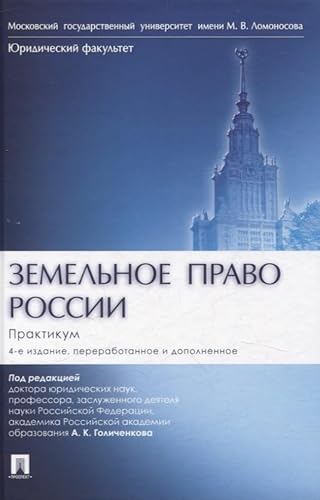
Zemelnoe pravo Rossii
praktikum. Uch. pos. dlya vuzov.-4-e izd., pererab. i dop.-M.:Prospekt,2025.
Does not imply availability
AI Overview
The book "Zemelnoe pravo Rossii" (Land Law of Russia) is an edited volume compiled by A.K. Golichenkov, A.A. Voroncova, and N.M. Zaslavskaya, with A.K. Golichenkov as the main editor. Here is a comprehensive overview of the book:
Key Themes
- Land Law in Russia: The book focuses on the legal framework governing land use and ownership in Russia. It covers various aspects of land law, including property rights, land use regulations, and the administrative processes involved in land management.
- Comparative Analysis: The volume includes comparative analyses of Russian land law with other jurisdictions, providing insights into best practices and potential reforms.
- Historical Context: The book discusses the historical development of land law in Russia, highlighting key legislative changes and their impacts on land ownership and use.
- Regulatory Framework: It delves into the regulatory framework governing land transactions, including issues related to ownership, leasing, and zoning.
- Environmental and Social Aspects: The book also explores the environmental and social implications of land use policies, emphasizing the need for sustainable and equitable land management practices.
Plot Summary
The book is structured to provide a comprehensive understanding of Russian land law through a series of chapters written by experts in the field. Each chapter addresses a specific theme or aspect of land law, such as:
- Historical Development: The early chapters trace the evolution of land law in Russia from the Soviet era to the present day.
- Legal Framework: Subsequent chapters delve into the current legal framework, including statutes, regulations, and judicial decisions.
- Comparative Analysis: Some chapters compare Russian land law with that of other countries, highlighting similarities and differences.
- Case Studies: The book includes case studies to illustrate practical applications of land law principles in various contexts.
- Reform Proposals: The final sections discuss potential reforms and future directions for Russian land law.
Critical Reception
While specific reviews of the book are not provided in the available sources, the book's comprehensive nature and the expertise of its editors suggest that it would be well-received by scholars and practitioners in the field of land law. The inclusion of comparative analyses and case studies likely adds depth and relevance to the discussion, making it a valuable resource for those interested in Russian land law.
For a detailed understanding, it would be necessary to consult the book directly or access academic reviews and critiques published in scholarly journals. The provided sources focus more on the broader context of land administration and legal techniques in post-Soviet countries, rather than a specific book review[1][2].